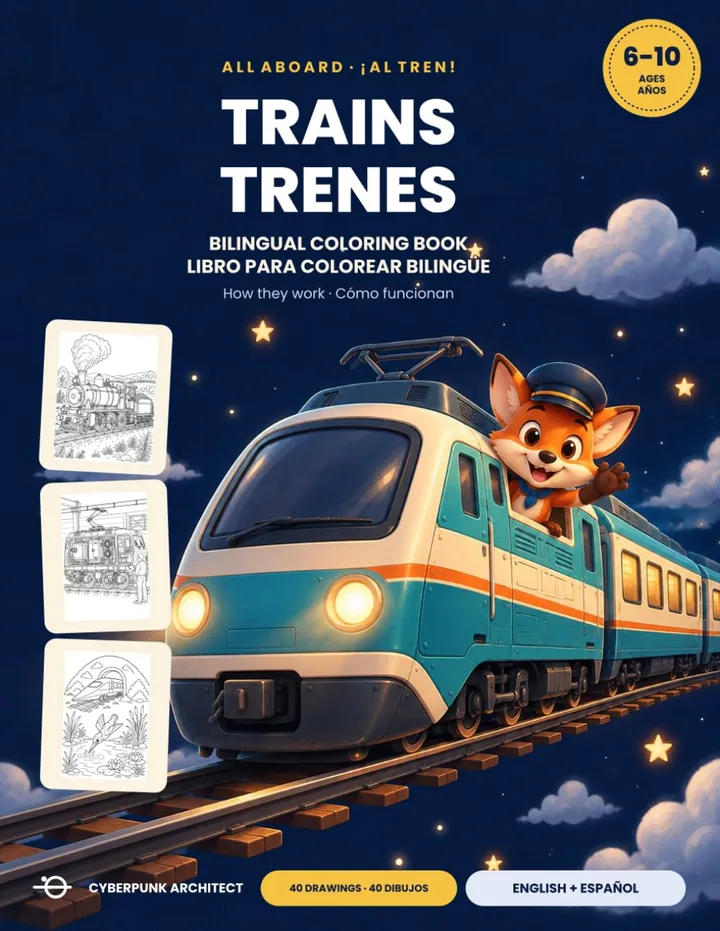
Color and Learn · Bilingual coloring book
Trains
Trenes · Bilingual Coloring Book
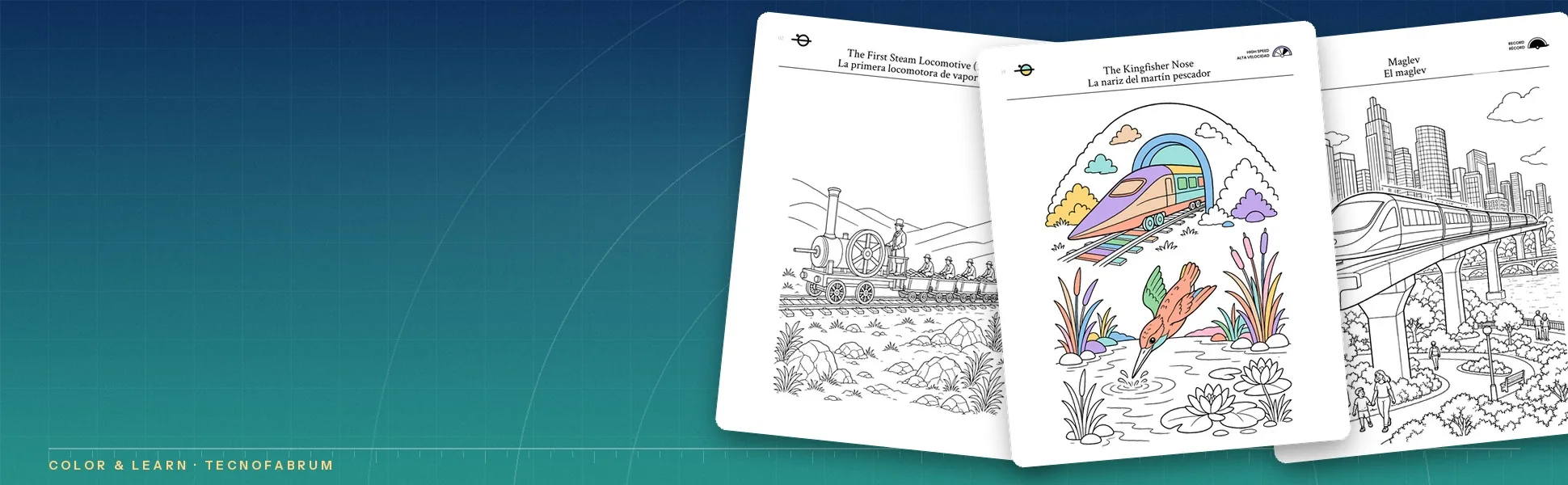
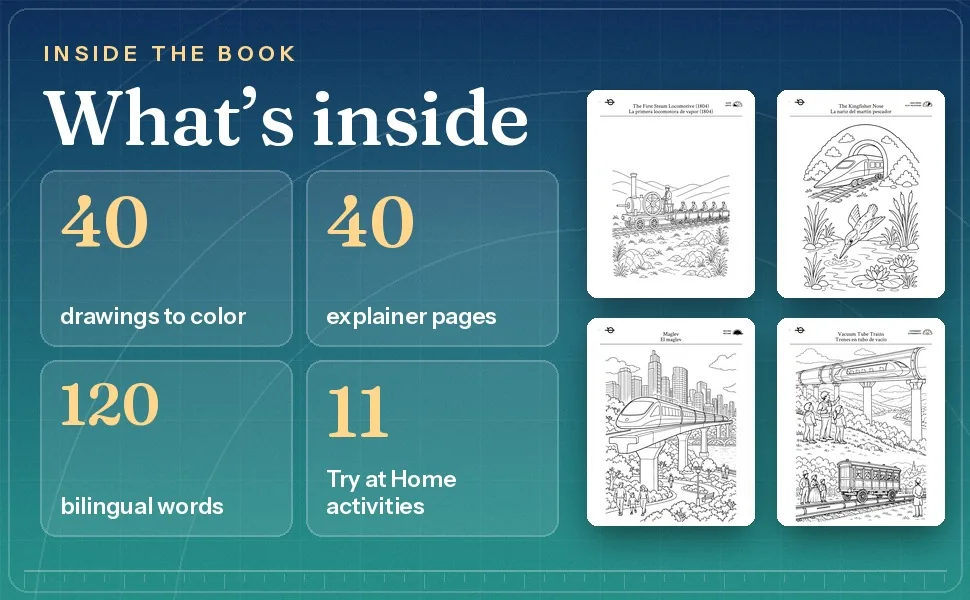
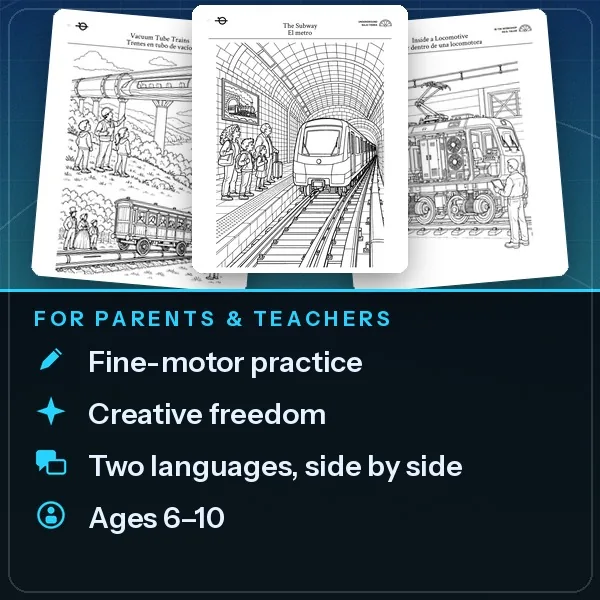
Forty drawings to color follow railways from wooden wagonways to bullet trains, subways, and maglevs. A speedometer on every page shows how fast the train goes, and the back of each drawing explains how it works.
Trains to color, from the first locomotives to the trains of the future, with every name in English and Spanish.
Paperback · amazon.com
Buy on Amazon (opens Amazon in a new tab)Also on amazon.es (opens Amazon in a new tab)The button opens the Amazon store for your country, where you see the current price and delivery.
Details
About this edition.
- Author
- Jaime Magalhães Júnior
- Series
- Color and Learn
- Format
- Paperback
- Ages
- 6–10
- Languages
- English and Spanish
- Pages
- 106
- Published
- ASIN
- B0HN1RP1JQ
Inside the book
All Aboard: From Horse-Drawn Wagons to Floating Trains
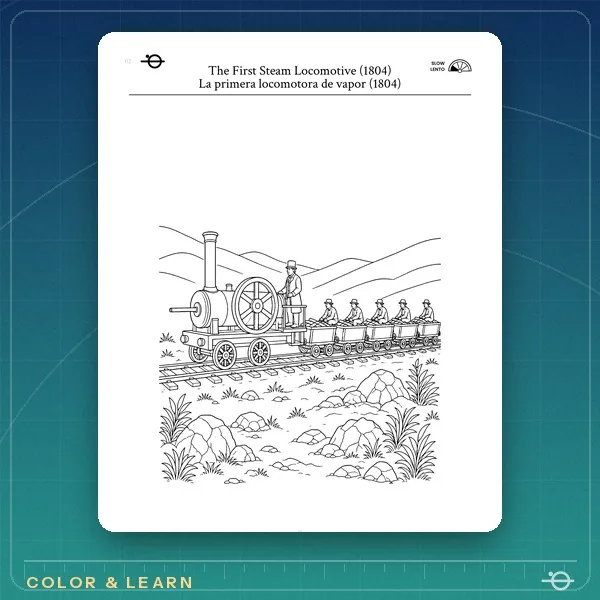 The First Steam Locomotive
In 1804, in Wales, engineer Richard Trevithick tried a steam engine on wheels that ran on rails.
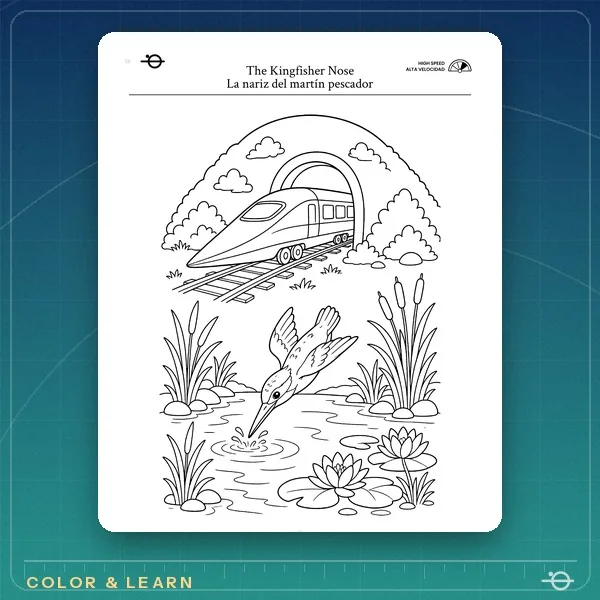 The Kingfisher Nose
A bullet train borrows a bird’s beak to quiet the boom at the end of a tunnel.
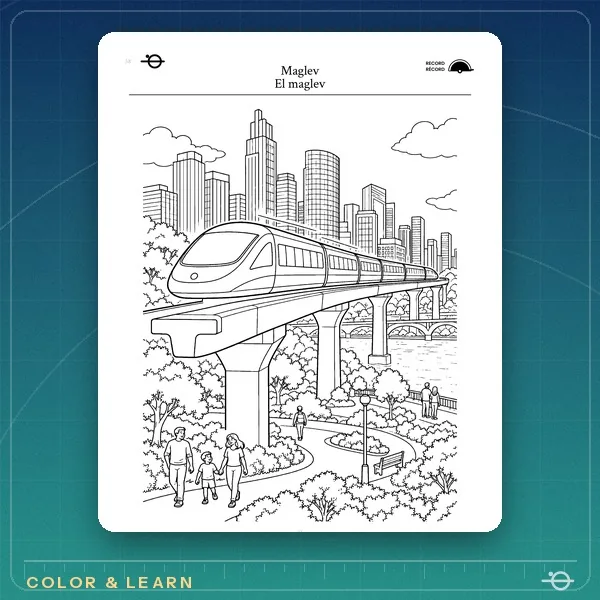 Maglev
A train that floats above its track, lifted and pushed by powerful magnets.
 Submarines
 Airplanes
 Astronaut Halloween